APPE highlights the value of eco-friendly farming practices for smallholder farmers
Farmers and agricultural actors in Rwanda’s highland zones, especially in Musanze and Nyabihu districts, have been encouraged to adopt environmentally responsible farming methods as a way to restore soil health, cope with climate change, and improve their livelihoods.
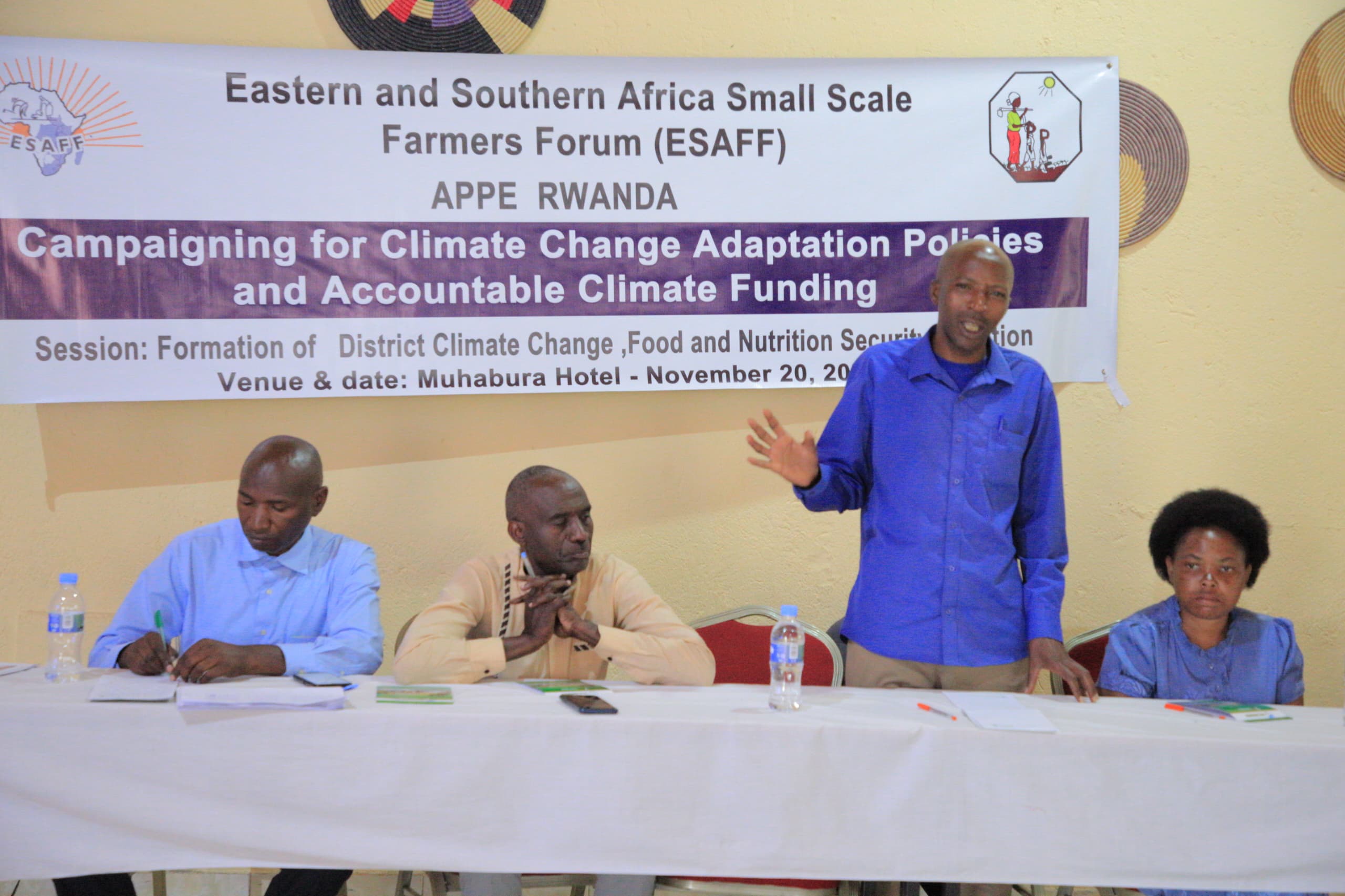
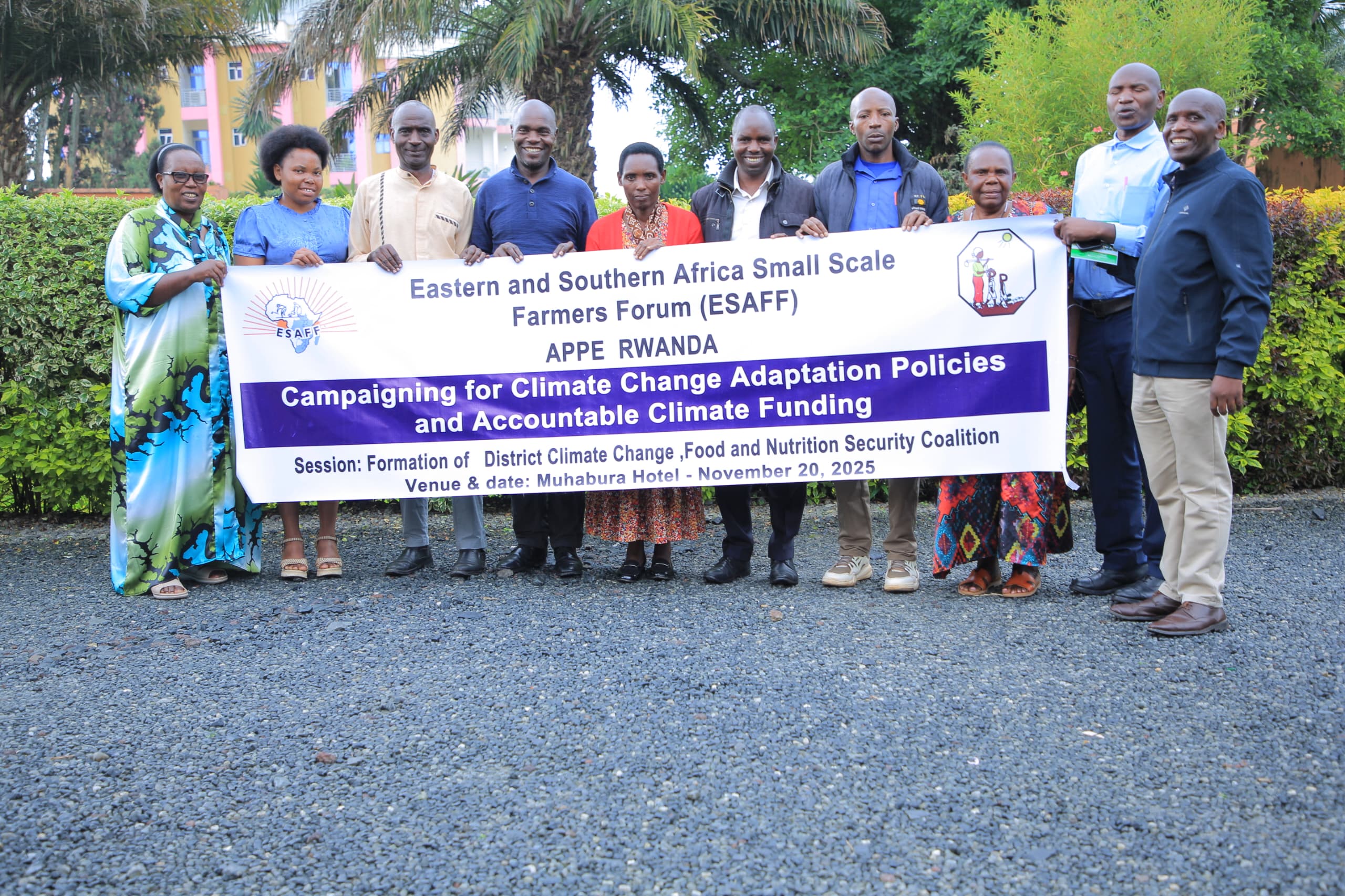
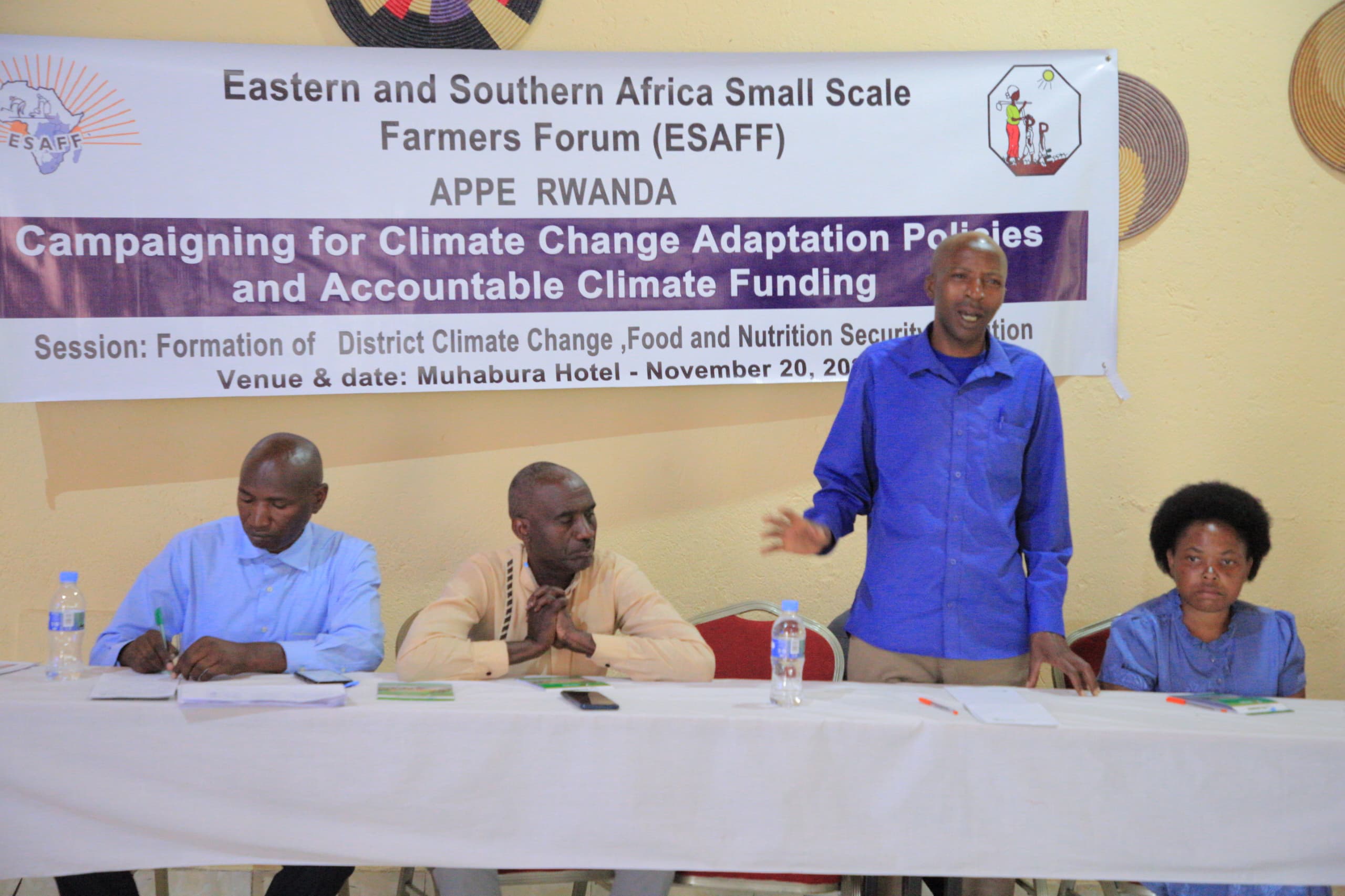
The message was delivered during a sensitization and advocacy meeting organized by Appui au Paysant Vulnérable pour la Protection de l’Environnement (APPE), a farmers’ organization affiliated with the Eastern and Southern African Small-Scale Farmers Forum (ESAFF). The engagement was part of a project sub-granted by ESAFF that focuses on campaigning for climate change adaptation policies and accountable financing.
The meeting brought together mainly small-scale farmers involved in the production of crops such as pyrethrum, potatoes, maize, beans, and other staples. Participants said the training helped them recognize harmful practices they had previously used, particularly those that contributed to soil degradation, environmental damage, and declining yields due to climate variability.
According to the farmers, the new knowledge will guide them toward farming methods that protect soil fertility while also safeguarding the health of producers and consumers.
Isaac Nzabarinda, a certified seed potato producer from Kinigi Sector in Musanze District, warned that irresponsible farming practices can have long-term consequences on both land productivity and human health.
“When farming is done without understanding its impact, soil becomes exhausted and yields drop, which eventually harms both farmers and the people who depend on the food produced,” he explained.
He noted that excessive or improper use of chemical fertilizers and pesticides destroys beneficial soil organisms, reducing natural fertility. Such practices can also contaminate animal feed, leading to livestock diseases, and expose consumers to serious health risks, including cancer.
“In many cases, chemicals are applied incorrectly and too frequently. This damages the soil, affects animals, and exposes people to health problems through the food they eat,” Nzabarinda added.
He stressed the importance of changing attitudes by embracing crop rotation, properly prepared organic manure, and minimizing the use of environmentally harmful inputs.
“When organic manure is well prepared and crop rotation is practiced, farmers get better-quality produce that remains productive and can even be used as seed in the following seasons,” he said.
Oscar Mpiranya, APPE’s national coordinator for small-scale farmers in Rwanda, said the organization focuses on ensuring farmers access reliable information, strengthening advocacy at both local and national levels, and connecting farmers to services that enhance productivity and income.
He explained that the awareness campaign was conducted in partnership with Musanze District authorities and farmer cooperatives, with a strong emphasis on soil conservation and climate change adaptation. As part of the initiative, APPE supported tree planting and agroforestry by purchasing and distributing trees to members of Tuzamurane Cooperative, which brings together 245 avocado farmers in Kinigi Sector.
Mpiranya also noted that particular attention was given to pyrethrum farmers through the Rwanda Pyrethrum Cooperative Union (RPCU), an umbrella body that includes eight cooperatives with more than 3,000 members each.
“Working through RPCU allows us to reach a large number of farmers across the volcanic region in a short time, making it easier to spread environmental conservation messages,” he said.
Jean Ngendahayo, the officer in charge of agriculture, livestock, and natural resources in Musanze District, described such training initiatives as key to implementing government policies on environmental protection and sustainable agriculture.
“Promoting environmentally friendly farming supports national efforts to protect natural resources while ensuring adequate and high-quality agricultural production,” he said.
To strengthen farmers’ resilience to climate shocks, Ngendahayo encouraged them to subscribe to agricultural insurance schemes.
“When disasters such as heavy rains, floods, or droughts occur, insurance enables farmers to recover and continue farming instead of giving up their activities,” he explained.
During the meeting, farmers were also reminded of the importance of agroforestry, erosion control, and other soil conservation measures to prevent land degradation, especially during periods of heavy rainfall.
Globally, institutions such as FAO, IFAD, and CGIAR continue to promote climate-resilient agricultural approaches, including climate-smart farming, soil and water conservation, increased use of organic fertilizers, and integrated crop–livestock systems.
These practices help boost productivity, improve food and nutrition security, and enhance soil fertility through the recycling of crop residues and livestock manure, while livestock production benefits from crop by-products.
Overall, sustainable soil management through environmentally friendly agriculture enables farmers to secure stable harvests, improve household nutrition, increase incomes, and protect the environment for future generations.